


24 Mar Never Tried Lebanese Wines?
You have been missing out on a real treat. Here is a little bit about the history of wine from a less well known wine region.
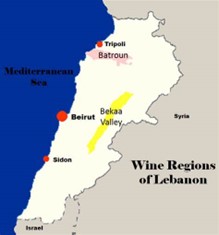
Lebanon has a small but high-quality wine industry. Sixty or so producers make around 11 million bottles from vines in the rocky, high-altitude Bekaa Valley, along with sites in Batroun, Chouf and Mount Lebanon.
The history of wine in the Levant can be traced back over 3500 years to when Lebanon was the home of the Phoenicians between 1550BC & 300BC. The Phoenicians were the first mariners to navigate the Mediterranean Sea, the founders of Carthage and the first civilisation to establish trade between its southern and northern shores. They are also credited with spreading their knowledge of wine and viticulture through Southern Europe and North Africa along their maritime trading routes. Many of today’s international grapes are thought to stem from the cuttings traded by the Phoenicians.
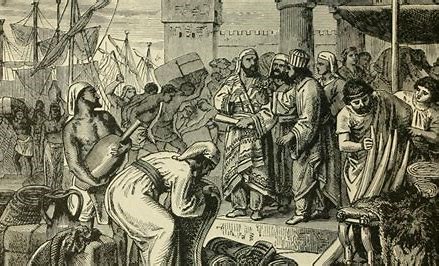
Phoenicians – That’s the right kind of bottle size!

Bacchus the Roman God of wine and fertility
Ancient Lebanon is also home to the modern alphabet, and its society recognised the benign relationship between man and wine; constructed in the 2nd Century CE by Imperial Rome the Temple to Bacchus, located in Bekaa Valley in the East of the country demonstrates this.
The wines of modern Lebanon have a strong French accent as its modern wine industry was established by the Jesuits in the mid 1800’s and wine was important to the thousands of French civil servants based there when Lebanon became a protectorate after WW1.
Vineyards are planted with Rhone varieties (such as Grenache and Syrah) along with Cabernet and the indigenous and intriguing varieties of Obiadeh and Merwar.
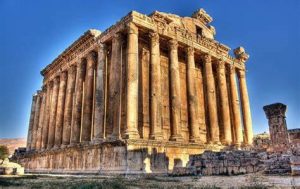
The Temple of Bacchus – Not a bad spot to drink some wine!
We are proud to offer wines from Domaine des Tourelles and Massaya.
 Domaine des Tourelles was founded in 1868 by Francois-Eugene Brun. He was in Lebanon as an engineer, over-seeing the construction of the Damascus highway.
Domaine des Tourelles White
Grape varieties include Viognier, Chardonnay, Obiadeh and Muscat of Alexandria. It has a nose of spicy white peach and jasmine. Fresh and bursting with peach and apricot flavours, it is beautifully balanced with an impressive backbone of elegant minerality.
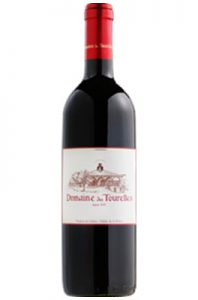
Domaine des Tourelles Red
A blend of Cabernet Sauvignon, Syrah, Cinsault, and Carignan, with notes of cassis, cherries, crushed black pepper and cloves. A wine packed with flavour and heritage.
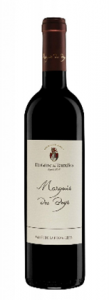
Domaine des Tourelles Marquis des Beys
Stylish and sophisticated, this really highlights the potential for quality in Lebanon. Produced from Syrah and Cabernet Sauvignon, it has a deeply red garnet hue with darkly intriguing brambly fruit and spice nose. It is densely packed with sumptuous flavours of blackcurrants and chocolate with a pure, crunchy, fine core, very moreish with fine tannins.

Massaya is run by brothers Sami and Ramzi Ghosn in partnership with Frédéric and Daniel Brunier from Domaine du Vieux Télégraphe and Dominique Hebrard, formerly of Château Cheval Blanc.
In recent years, Massaya have established vineyards in the more extreme, higher altitude areas of the Bekaa valley, moving onto hillside sites at Ras Baalbeck and Hadath Baalbeck. Their vineyards are planted with Grenache, Syrah and Mourvèdre.
Massaya Terrasses de Baalbeck
Attractive ruby hue of medium depth. A nose of fresh scrubland with a hint of date, while its finesse and elegance are clear as soon it touches the palate.
Steadily gains in power over time, with tannins that reflect its cellaring potential. wines are matured for 18 months in French oak. A deep colour leads to an expressive nose of damson, prune, and sweet spices, allied to a full palate with intensity and fine tannins.

Domaine du Vieux Télégraphe
Not structly Lebanese but well worth a mention due to the link to Massaya!
Domaine du Vieux Télégraphe has been run by the Brunier family since 1891. The estate’s vineyards are situated on the famous “Plateau de la Crau”, the stony terrace where there is nothing but “galets roulés”, or rounded stones, as far as the eye can see. The wine is bottled unfined and unfiltered and displays tremendous concentration and complexity with intense flavours of dark cherry and “garrigue” herbs. 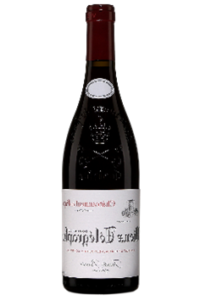
Sorry, the comment form is closed at this time.