


06 Jul THE FALL & RISE, AND FURTHER RISE, OF ROSÉ WINE
You can’t beat a cold glass of Rosé on a hot sunny day, and as we are always the optimist when it comes to sunny days in good Old Blighty, we thought we would give you some background on one of France’s fastest growing wine categories.
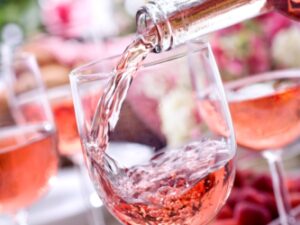
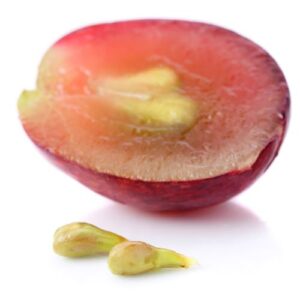
French rosé wine is made by soaking cold, crushed black grapes anywhere from 6-24 hours to leach some colour from the skins. The flesh within the grapes is white, the colour comes only from the skins. This is the same method as for red wines, the only difference is the juice is left in contact with the skins for up to three weeks in the case of red wines. Don’t believe us? Peel a red grape from the supermarket and check out the flesh inside! Fermentation starts when the juice has been drained from the pulp and the resulting liquid is the Rosé we know and love.
By default, wines made by the ancient Greeks and Romans were often Rosé; inefficient foot treading of red grapes in stone presses did not yield juice with much colour, but these were considered ‘healthier’ and more desirable than bitter fully extracted, tannic reds. This sentiment lasted well into the Middle Ages, when the pale ‘clarets’ from Bordeaux were starting to gain the world’s attention. To the powerful English market, the most prized clarets were the vin d’une nuit or “wine of one night”, which were pale-rosé coloured wines made from juice that was allowed only a single night of skin contact.
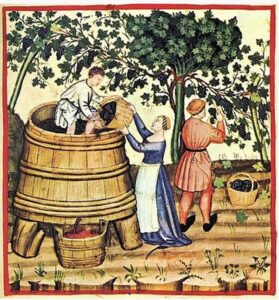
Stomp Stomp Stomp
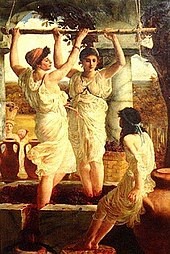
Good place for a natter
In more modern times rosé was often the bi-product of ‘bleeding off’ fermenting juice from frankly awful red grapes to make red wines better by changing the juice to skin-juice ratio. This was ‘pinard’ often sold for 10 old French Francs a litre, and pretty ‘gruff’ it was too.
Rosé wines from the Provence are always held in high esteem and are considered the main go to for many Rose drinkers. This is the spiritual home of this style of wine and again, is attributed to the Romans who used the Rhone river to transport their wines all over France and further afield. Then there was Rosé d’Anjou from France’s Loire Valley; cheap, inoffensive, and sweet; a staple of many 1970’s wine lists.
Not just the French…
It reached its nadir in middle-class consciousness by way of Mateus Rose; an iconic brand of aspirational dinner parties of the Seventies and Eighties, in dining rooms complete with fondue sets and hunting scene table mats. Mateus sold in the millions of cases.
Legend has it that when the producers of this polite, fizzy, market ready wine needed a visual brand and duly approached the owner of the Palacios de Mateo and asked to use an image of the palace on their label. Given the option of a royalty per label, or a flat fee, the nobleman sadly took the flat fee.
Fifty years on, and millions of cases later…….
Styles of wines marketed in the Eighties and Nineties reflected a greater influence of the New World. Examples from Chile, Australia and South Africa then swamped the market. These were often ‘glow in the dark’ deeply coloured wines with high alcohol levels. This was the era of branded wines from huge producers with large advertising budgets and stock market listings. At the same time, the Americans, not to be left out, developed White Zinfandel. Low in alcohol and with a certain sweetness it is now a favourite for many.
But as we know, tastes change. Good, modern Rosé is now taken seriously both in the vineyard and the cellar and the quality shines through with lighter colours, elegance, finesse and freshening acidity. These are the touch-points of quality and the French still seem to have the upper hand when it comes to making this old style of wine.
Versatile and refreshing, remember, Rosé should no longer be limited to the summer months but should be an all year affair.
Domaine de Grandpré ‘Minotaure’ Côtes de Provence Rosé, France
Made up of 26 hectares of vineyards and situated at the base of the Massif de Maures, Domaine de Grandpre’s vines are grown in the garigue soils typical of Provence. Planted among the estate’s olive trees and bee hives, the vines are cultivated organically with a deep resect for the terroir. In the winery natural products are used wherever possible and sulphites are kept to a minimum.
Super example of a classic Rosé from Provence. Full of raspberry and white peach, lovely and dry with a long, lingering finish.

Lafran Veyrolles Organic Bandol Rosé, Provence, France
Domaine Lafran-Veyrolles is an estate with superb terroir and it is widely recognised as one of the top three producers in the Bandol appellation. The estate is nestled in the protective hillsides of the Cadière d’Azur which benefit from a maritime climate where cooling sea breezes extend the hours of ripening and prevent overheating.
Appealing lemon and herb nose. Flavours of warm southern herbs and rich, rounded fruit, very much a food wine with a powerful character and delicious dry finish. Serious rosé with a strong personality.

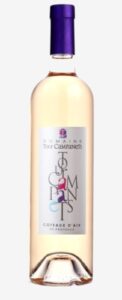
Domaine Tour Campanets Aix en Provence Rosé, France
A delightful property situated in the hills half an hour’s drive North of Aix-En-Provence. The charming Emmanuelle Baude was a lawyer who decided to go into winemaking. What an excellent career move! Her organic Rosé is quite delicious
A blend of Syrah, Grenache, Cabernet Sauvignon and Carignan from her 28 hectares of vines. Three hours skin contact gives a lovely pale rosé colour. On the palate it is dry and has wonderful smooth, juicy fruit flavours.
Lafage Miraflors Rosé, Côtes Catalanes, France
In the heart of Roussillon, the southernmost point of France, in a stone-built 15th century Catalan farmhouse, Domaine Lafage overlooks the road that connects the small town of Perpignan to the Mediterranean coast.
With notes of white fruit and citrus aromas, this rosé manages to combine delicate and fleeting minerality with a lightness of touch that refreshes and demands another glass and in a fabulously funky looking bottle too!

Sorry, the comment form is closed at this time.